Yew
Our native common yew (Taxus baccata) has the ability to live the longest of all the UK's native tree species. It's a familiar site in churchyards and may thrive for thousands of years. They become ancient from around 900 years onwards.

Ancient yew. (Photo: David Alderman)
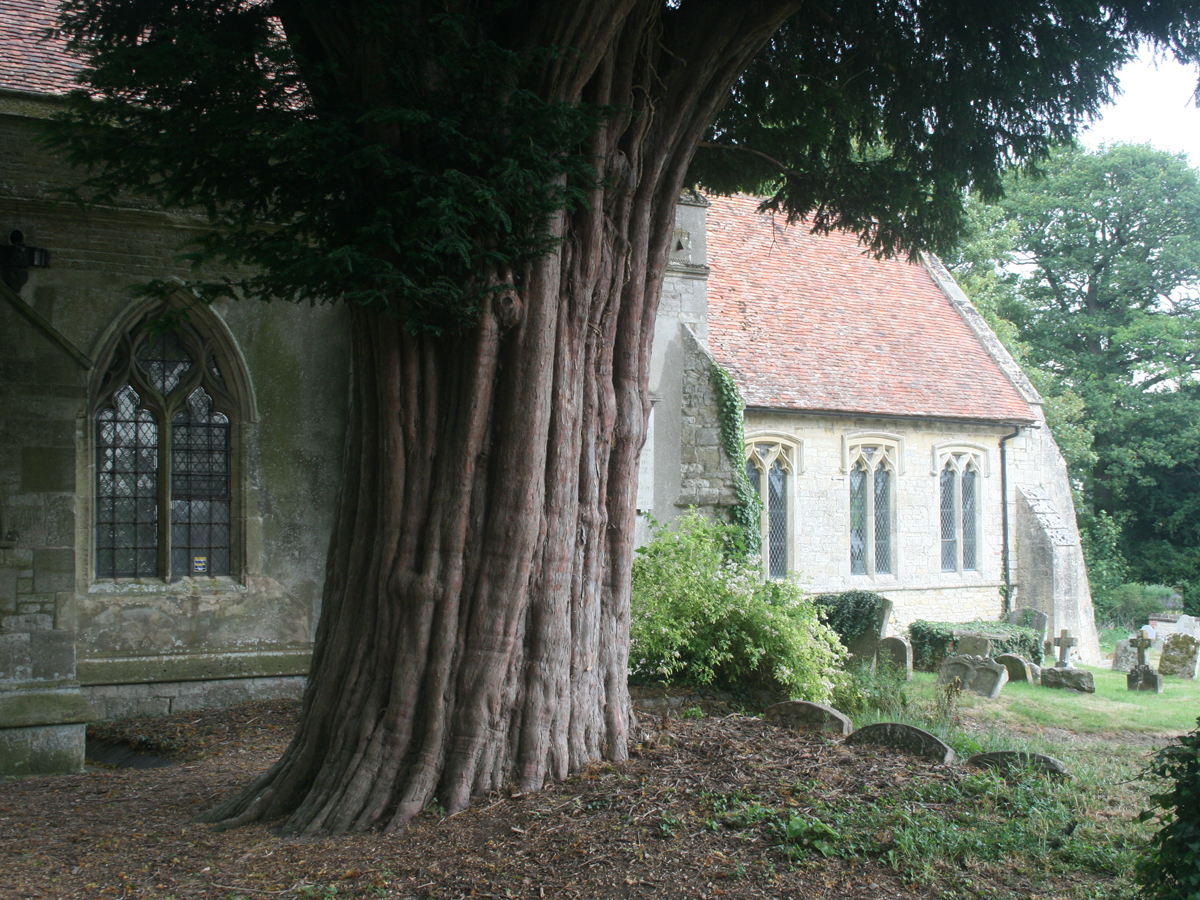
Veteran yew. (Photo: David Alderman)
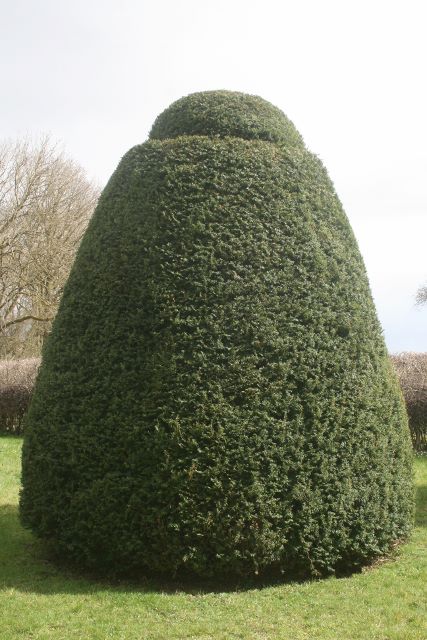
Notable yew. (Photo: David Alderman)
Distribution
Throughout the UK, including upland and cliff sites.
Typical location
Churchyards, designed landscapes and gardens. Occasionally woodlands, hedgerows and limestone cliffs.
Age
Yew may be able to live for 3,000 years although 1,500 may be more typical.
Yew may be considered chronologically ancient from 900 years onward (early and pre Norman), although many will have ancient characteristics from around 500 years. Ageing yew trees is very difficult!
A veteran yew must be mature and have visible and significant decay features, regardless of its size.
A notable yew must be; mature, generally large for its species, a significant tree within the local landscape, or be of historical or cultural importance.
Size
Yew can grow up to 10m plus in girth.
Record all mature yew with significant decay regardless of its size.
It’s important to rely on characteristics rather than size, which is an unreliable indication of age. Most chronologically ancient yew are greater than 6m in girth, but if they grow in woodland, or if historically managed as a pollard, they may be no more than 4m in girth.
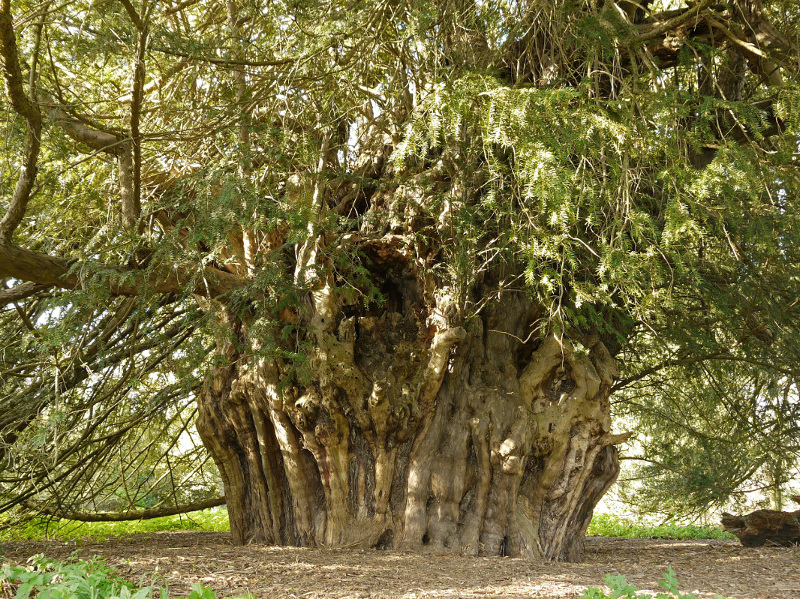
The Ankerwycke Yew in Berkshire is said to have been witness to the sealing of the Magna Carta in 1215. (Photo: Julian Hight/WTML)
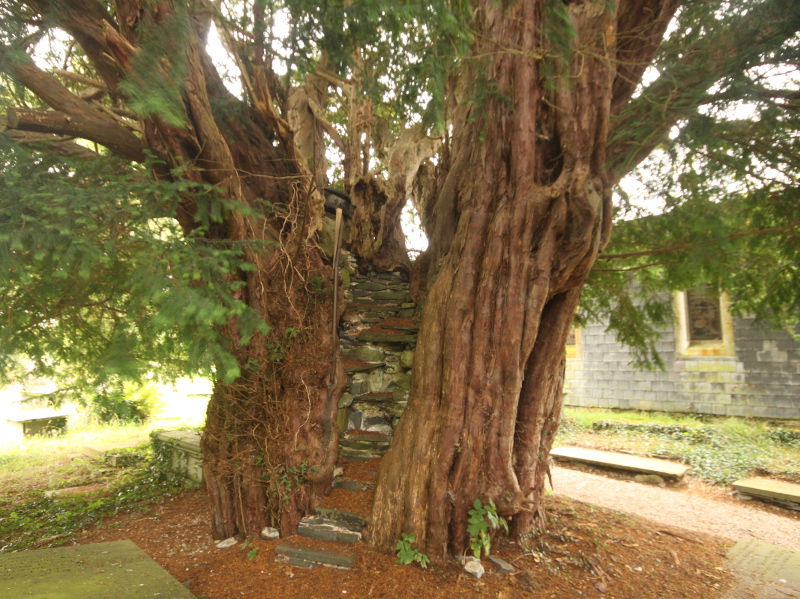
The Pulpit Yew in Denbigshire, Wales which was transformed into a pulpit. Legend has it that John Wesley preached from here. (Photo: Rory Francis/WTML)
Ancient characteristics
- Girth is large
- Major trunk cavities or progressive hollowing
- Decay holes
- Physical damage to trunk
- Bark loss
- Large quantities of dead wood in the canopy
- Crevices in the bark, under branches or on the root plate, sheltered from direct rainfall
- Fungal fruiting bodies (from heart rotting species)
- A high number of interdependent wildlife species
- Epiphytic plants
In addition the tree may have:
- Cultural or historic value
- A prominent position in the landscape
- A marker or boundary tree, such as on an ancient drovers route.
- May be associated with a Saxon church or ancient archaeological site
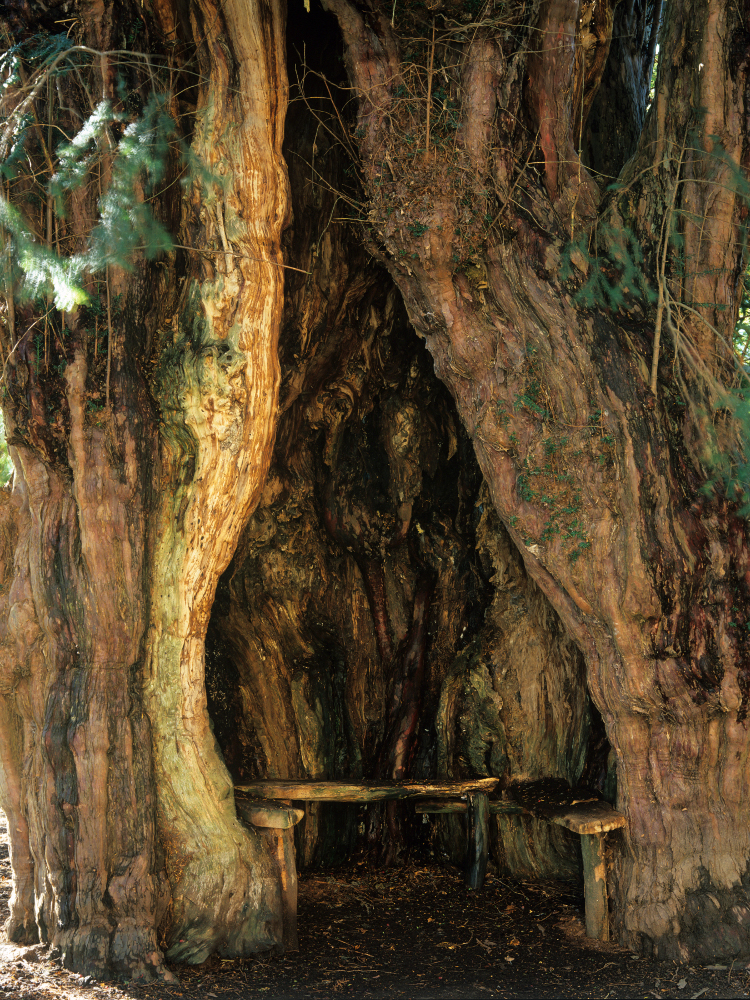
Look for signs of hollowing. (Photo: Archie Miles)
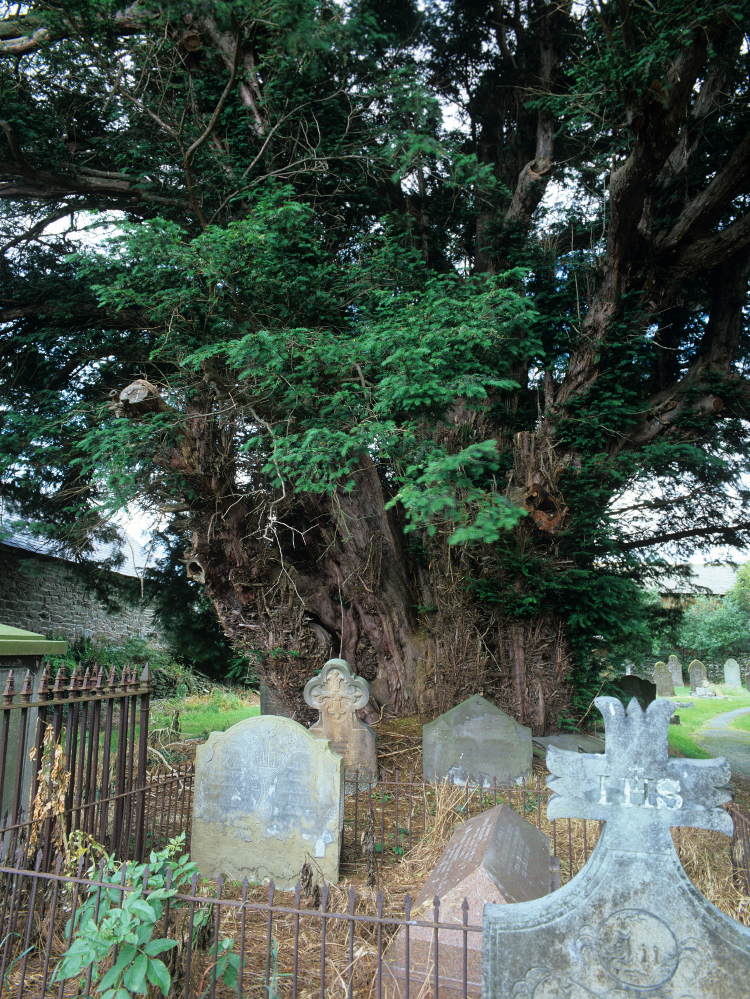
Yews are often found in churchyards. (Photo: Archie Miles)
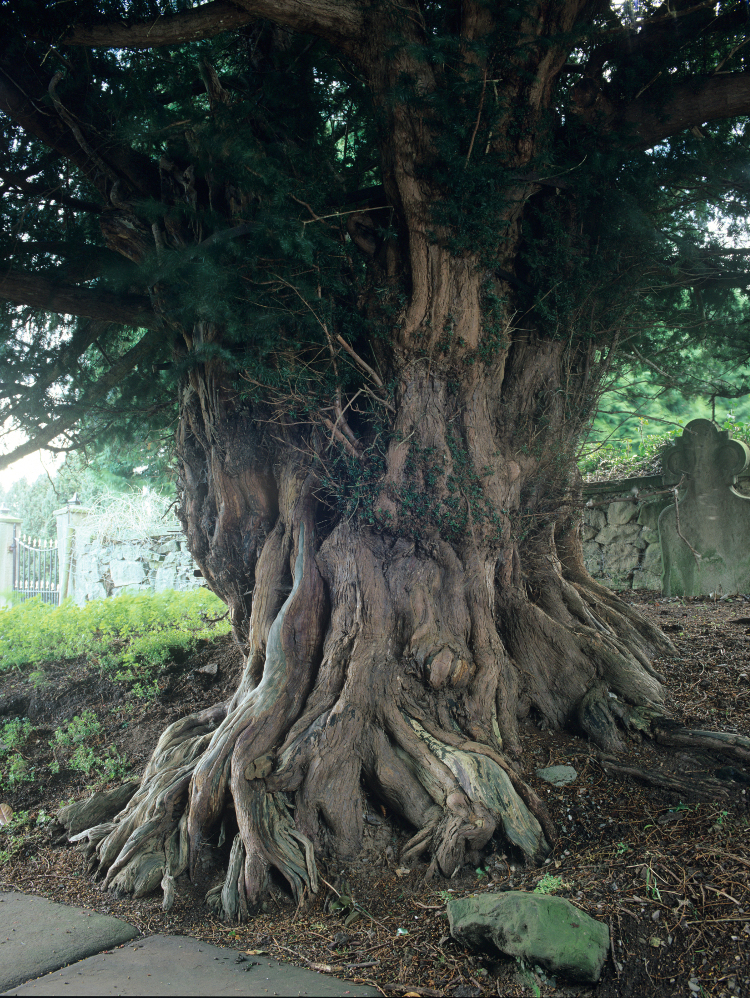
Girth is large. (Photo: Archie Miles)
